Among all the treasures of Irish Freemasonry, none is older or more evocative than a small, corroded brass square drawn out of the mud of a Limerick river — a builder’s tool bearing the date 1507 and a motto that still reads as a rule for living.
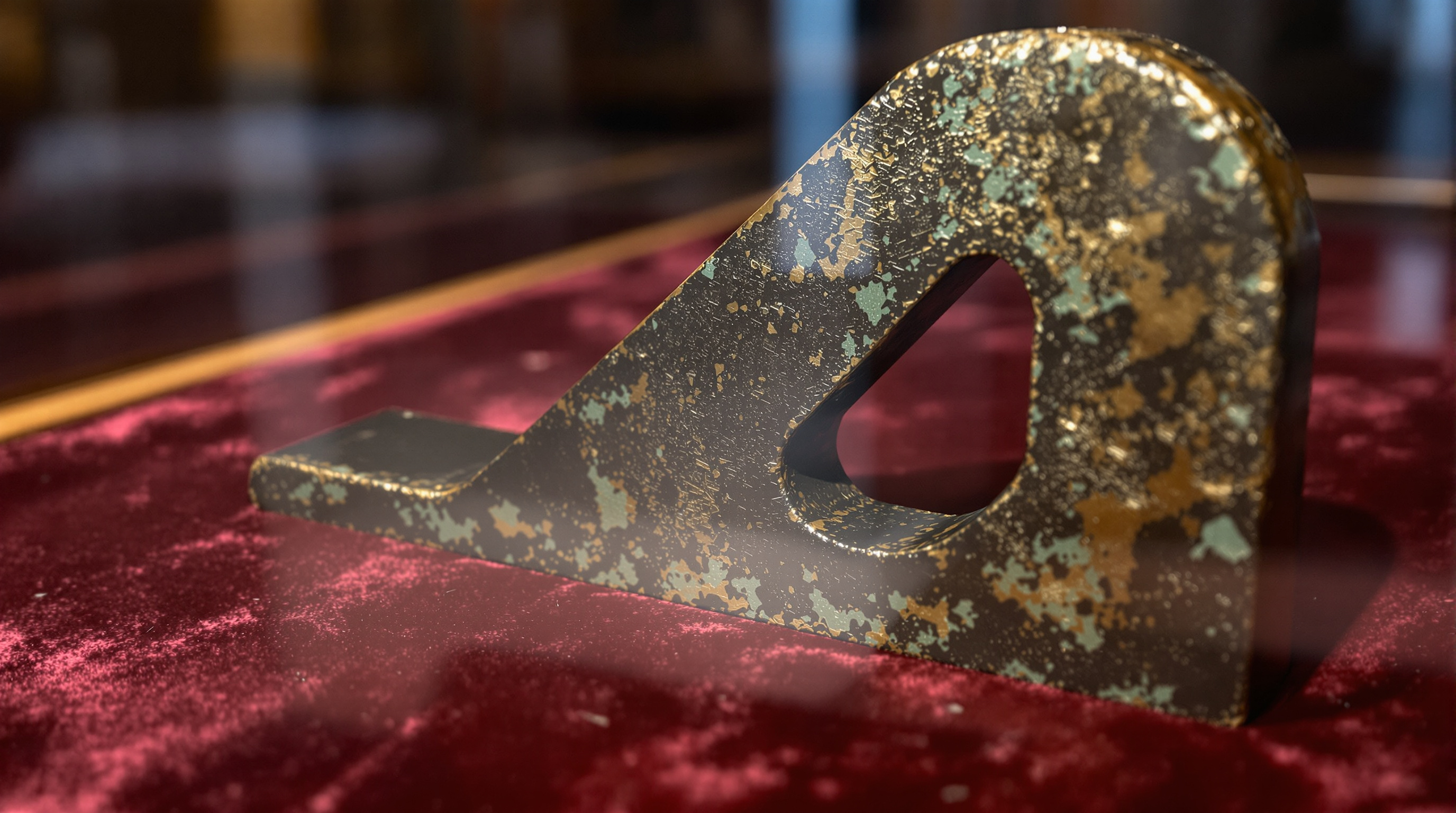
Found beneath a bridge
The square was recovered from the foundations of Baal’s Bridge in Limerick in 1830, when the medieval bridge was taken down and rebuilt. The contractor for the works was the architect James Pain, one of the most prolific builders in early nineteenth-century Munster. On removing the old structure, workmen found beneath the foundation stone at the English-town side a small brass square, “much eaten away” by its centuries underground. It bore the date 1507 and, in each of its inner angles, the shape of a heart.
The inscription
On its two limbs the little square carries an inscription that has charmed everyone who has read it since. It is usually given as:
“I will strive to live — with love & care”
“Upon the level — by the square.”
To a Freemason the words are doubly resonant, for the level and the square are among the craft’s central working tools and moral symbols — the level teaching equality, the square teaching honest dealing. To find those very ideas already inscribed on a tool dated 1507 is, for many, the single most striking piece of physical evidence for the antiquity of the craft in Ireland.
How it was recorded
The find was announced to the Masonic world in the Freemasons’ Quarterly Review of 1842, where the Provincial Grand Master of the day published a short note and a facsimile sketch of the relic. In that first sketch the date was mistakenly copied as 1517; the square itself plainly reads 1507. The object was later studied in detail by the antiquarian H. F. Berry, Assistant Keeper of the Irish Records, whose 1905 monograph The Marencourt Cup and Ancient Square remains the standard scholarly account and pairs the square with the other great treasure of the same lodge, the Marencourt Cup.
Among the oldest in the world
Dated working tools of this age are exceedingly rare, and the Baal’s Bridge Square is routinely described as one of the earliest datable Masonic items anywhere in the world. It has long been carefully preserved by Antient Union Lodge No. 13 of Limerick, the historic body traditionally recorded as its custodian. For the region’s wider collection of Masonic objects, see our overview of regional Masonic artefacts; for how a single lodge came to hold two such national treasures, read on to the Marencourt Cup.
Whether the square was buried as a builder’s good-luck token, a foundation deposit, or simply lost, no one can now say. What is certain is that a Limerick mason of the early sixteenth century wished to live “upon the level and by the square” — and that five centuries later his words survive.
This heritage account is independent and unaffiliated; the lodge named is cited as the artefact’s historic custodian only.