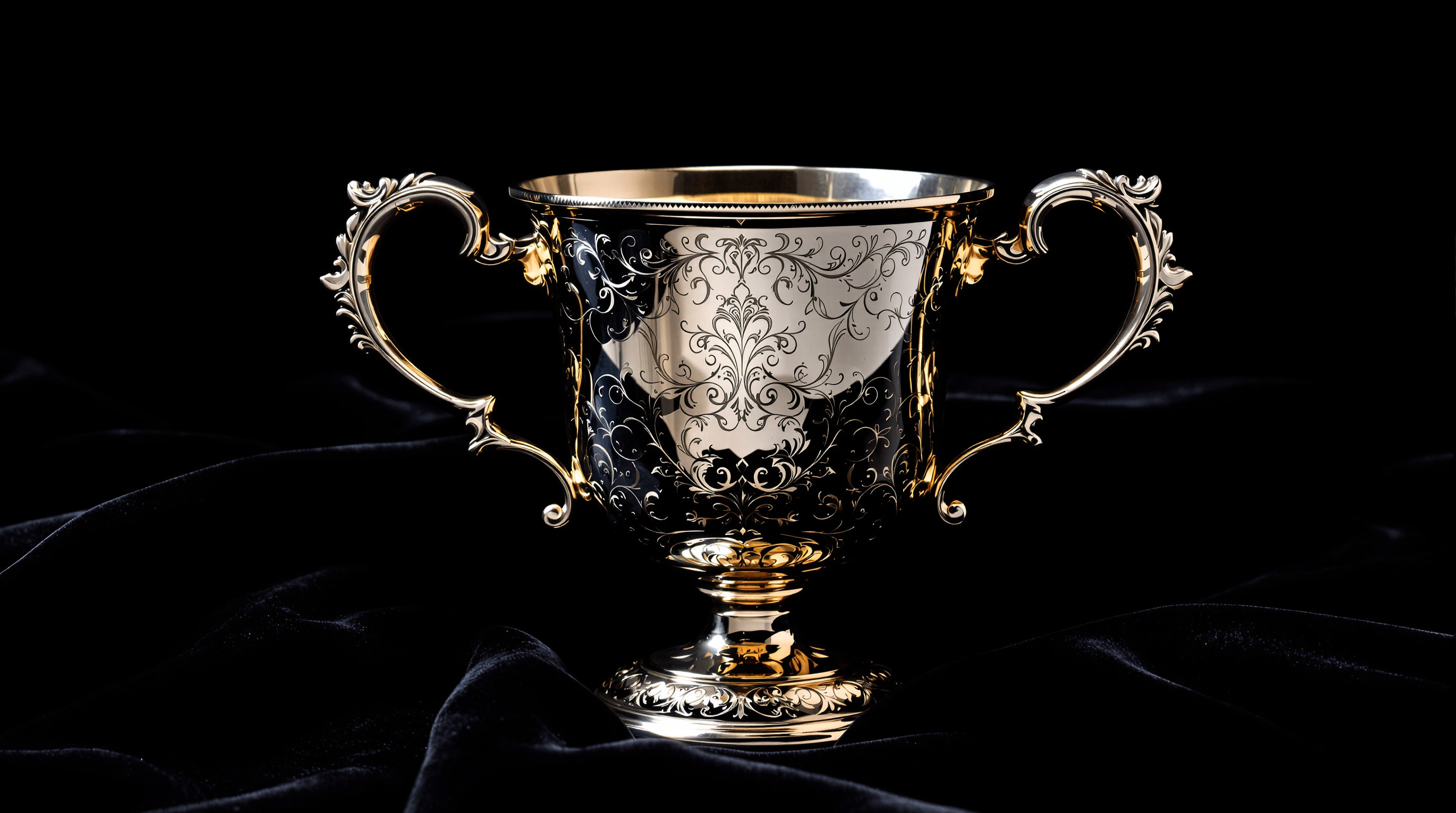
If the Baal’s Bridge Square speaks of the craft’s antiquity, the Marencourt Cup speaks of its ideals — a piece of Limerick silver born from an act of mercy between enemies in a time of war.
A capture in the Napoleonic wars
The story belongs to the Napoleonic Wars, when French privateers preyed on British and Irish shipping. According to the account preserved in Limerick, a merchant vessel named the Three Friends was taken at sea by the French privateer Le Furet, commanded by a Captain Louis Marencourt. By the ordinary rules of war the ship, her cargo and her crew were lawful prizes.
A sign of recognition
What happened next became legend. In conversation with his captive, the master of the Three Friends — recorded as a Captain Campbell — made himself known to Marencourt as a Freemason. Recognising a brother of the craft, the French captain set aside the ordinary spoils of war: he restored the ship, her cargo and the liberty of her crew, and sent them on their way. In the middle of a bitter conflict, a shared obligation had proved stronger than the enmity of nations.
The cup that honoured him
The brethren of Antient Union Lodge No. 13 in Limerick were so moved by this “illustrious example of Masonic virtue” that they resolved to present Captain Marencourt with a silver cup in his honour, dated 1813. Fate, however, intervened: Marencourt died before the presentation could be made. In time the cup made its way to Limerick, where it has been treasured ever since alongside the ancient square — the two objects together forming the subject of H. F. Berry’s 1905 study The Marencourt Cup and Ancient Square.
Brotherhood beyond borders
The tale is often retold because it captures something essential about the fraternity’s self-image: that the principles of Freemasonry — brotherly love, relief and truth — are meant to reach across the lines that divide people, including the deepest line of all, that between enemies at war. Whether every detail happened exactly as tradition records, the cup remains a genuine early-nineteenth-century object and a cherished part of the region’s Masonic history.
An independent heritage account. Lodge and personal names appear as part of the documented historical record only.