A lodge is, among other things, a keeper of things. Over three centuries the Freemasons of North Munster accumulated a remarkable material record — silver, jewels, documents and, above all, one small brass square — that together traces the history of the region itself.
A collection rooted in the city
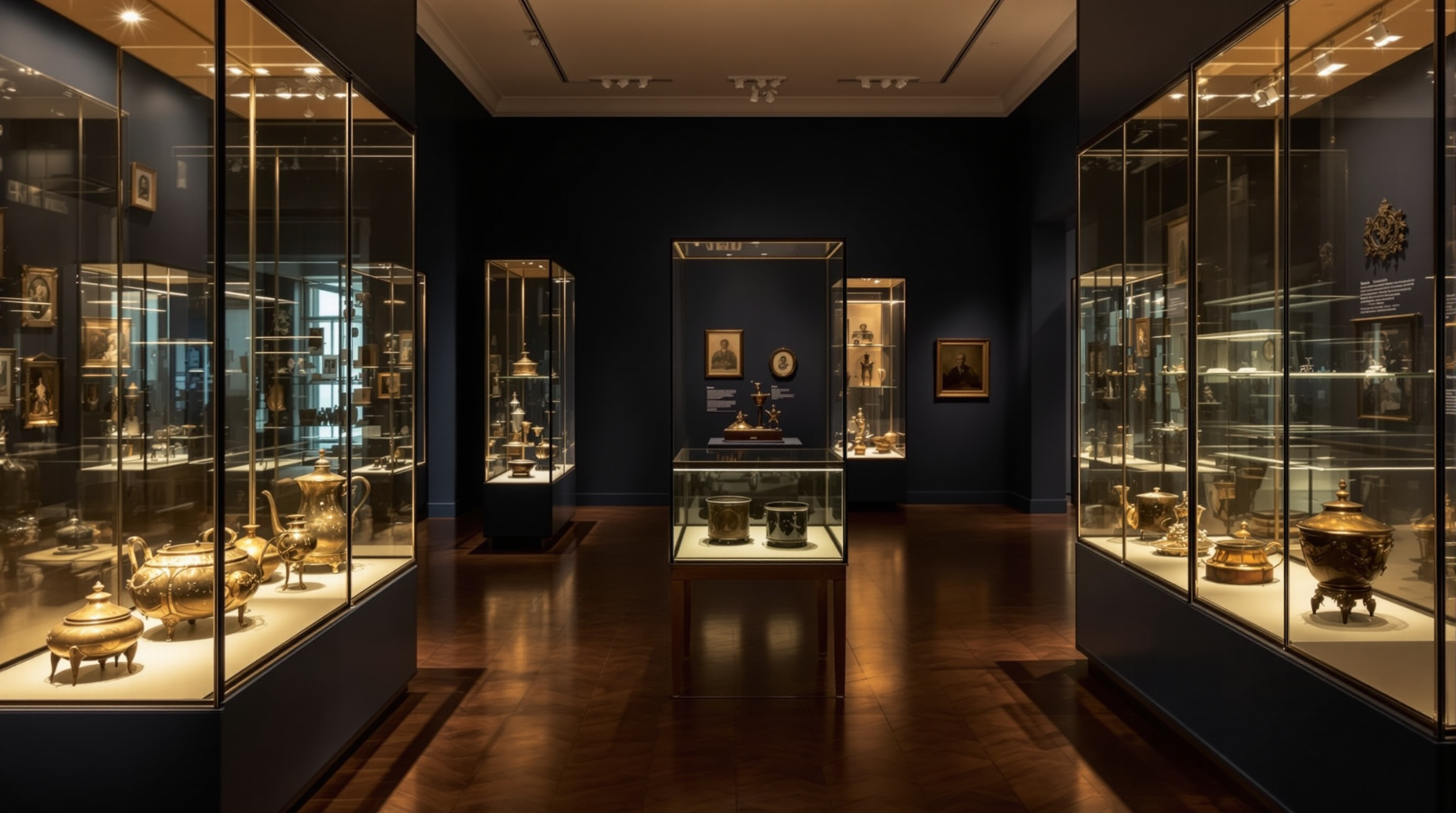
When a purpose-built Masonic centre opened on Limerick’s King’s Island in 2005, close to the medieval core of the city, it included a museum and library. Their purpose was explicit: to display exhibits with Masonic connections showing the historical links and interaction between the Masonic order and the commercial life of Limerick and its surrounding area over the last three hundred years and more. The story such objects tell is not one of secrecy but of ordinary civic life — the merchants, architects and professional men whose lodge memberships sat alongside their businesses and public offices.
The treasures
Two objects stand above the rest, and both belong to the same historic lodge:
- The Baal’s Bridge Square, dated 1507 — reckoned among the oldest datable Masonic artefacts anywhere.
- The Marencourt Cup of 1813 — a piece of silver commemorating an extraordinary act of wartime chivalry between Freemasons.
Together they were the subject of H. F. Berry’s classic 1905 study, and together they anchor any account of the region’s Masonic material culture.
Jewels, warrants and minute books
Beyond the two famous treasures, a typical lodge inheritance includes officers’ jewels and collars, the founding warrant that authorised the lodge to meet, tracing boards painted with symbolic designs, ceremonial aprons, and — often most valuable to the historian — the minute books that record, meeting by meeting, who belonged and what they did. For genealogists and local historians these are a rich and under-used source.
Seeing more
Those wishing to understand the wider material history of the craft will find no better starting point than the Museum of Freemasonry, whose collections set the Limerick treasures in an international context. To place these objects in their landscape — the streets, bridges and buildings of the mid-west — see our guide to the heritage landscape of North Munster.
This resource is independent; it describes heritage collections for educational purposes and is not a visitor service.